
 Blog
BlogStainless steel looks premium when it’s clean—until fingerprints, water spots, and dull patches take over. Whether it’s your fridge, oven, rangehood, taps, or kitchen sink, stainless steel can start looking cloudy even when you’re wiping it regularly.
The good news is you don’t need harsh chemicals or aggressive scrubbing. With the right approach, you can bring back that polished shine and keep it looking fresh longer.
If you’d rather have it professionally handled as part of a full-home reset, check our deep cleaning service (internal link: /deep-cleaning) or ongoing regular house cleaning (internal link: /regular-house-cleaning).
Why Stainless Steel Loses Its Shine
Most “stainless steel mess” falls into a few common categories:
-
Fingerprints and skin oils (especially on fridges and dishwashers)
-
Water spots and mineral deposits (taps, sinks, splashbacks)
-
Grease film (rangehoods, cooktops, oven fronts)
-
Incorrect wiping (going against the grain causes streaks)
-
Scratchy tools (scourers create fine marks that trap grime)
The key is to clean in layers: remove grease first, then tackle minerals, then polish.
Before You Start: Find the Grain
Most stainless steel has a visible “grain” (fine lines running in one direction). Always wipe with the grain, not in circles. This prevents streaks and helps avoid micro-scratches.
Quick tip: Look at the surface under a light—grain direction becomes obvious.
What You’ll Need (Simple Kit)
You probably already have most of this:
-
2–3 microfiber cloths (one for cleaning, one for drying, one for polishing)
-
Mild dish soap
-
White vinegar (for water spots)
-
Baking soda (for sinks and stubborn marks)
-
Olive oil or mineral oil (for polishing appliances)
-
Spray bottle (optional)
Avoid: steel wool, abrasive pads, and powdered cleaners on appliance finishes.
Step-by-Step: Make Stainless Steel Shine Again
Step 1: Remove grease and grime first
Grease is the number one reason stainless steel looks dull.
Method:
-
Mix warm water + a few drops of dish soap
-
Dip a microfiber cloth, wring it out well
-
Wipe with the grain
-
Rinse with a clean damp cloth (plain water)
This step matters because polishing over grease just spreads it around.
Step 2: Dry immediately (this prevents streaks)
Use a dry microfiber cloth and buff with the grain.
Drying is what separates “clean-ish” from “shiny.”
Step 3: Remove water spots and cloudy marks (vinegar method)
If you still see spots or haze, it’s usually mineral build-up.
Method:
-
Lightly mist white vinegar onto a cloth (not directly on the appliance if it’s near electronics)
-
Wipe with the grain
-
Immediately dry and buff with a clean cloth
Important: Vinegar is great for mineral spots, but don’t leave it sitting—wipe and dry.
Step 4: Polish for the “like new” finish (appliances)
For fridges, dishwashers, and oven fronts, a tiny amount of oil gives that showroom shine.
Method:
-
Put 2–3 drops of olive oil or mineral oil on a microfiber cloth
-
Wipe a very thin layer with the grain
-
Buff with a clean dry cloth until it looks even (no oily residue)
Less is more. If it looks smeary, you used too much—buff again with a dry cloth.
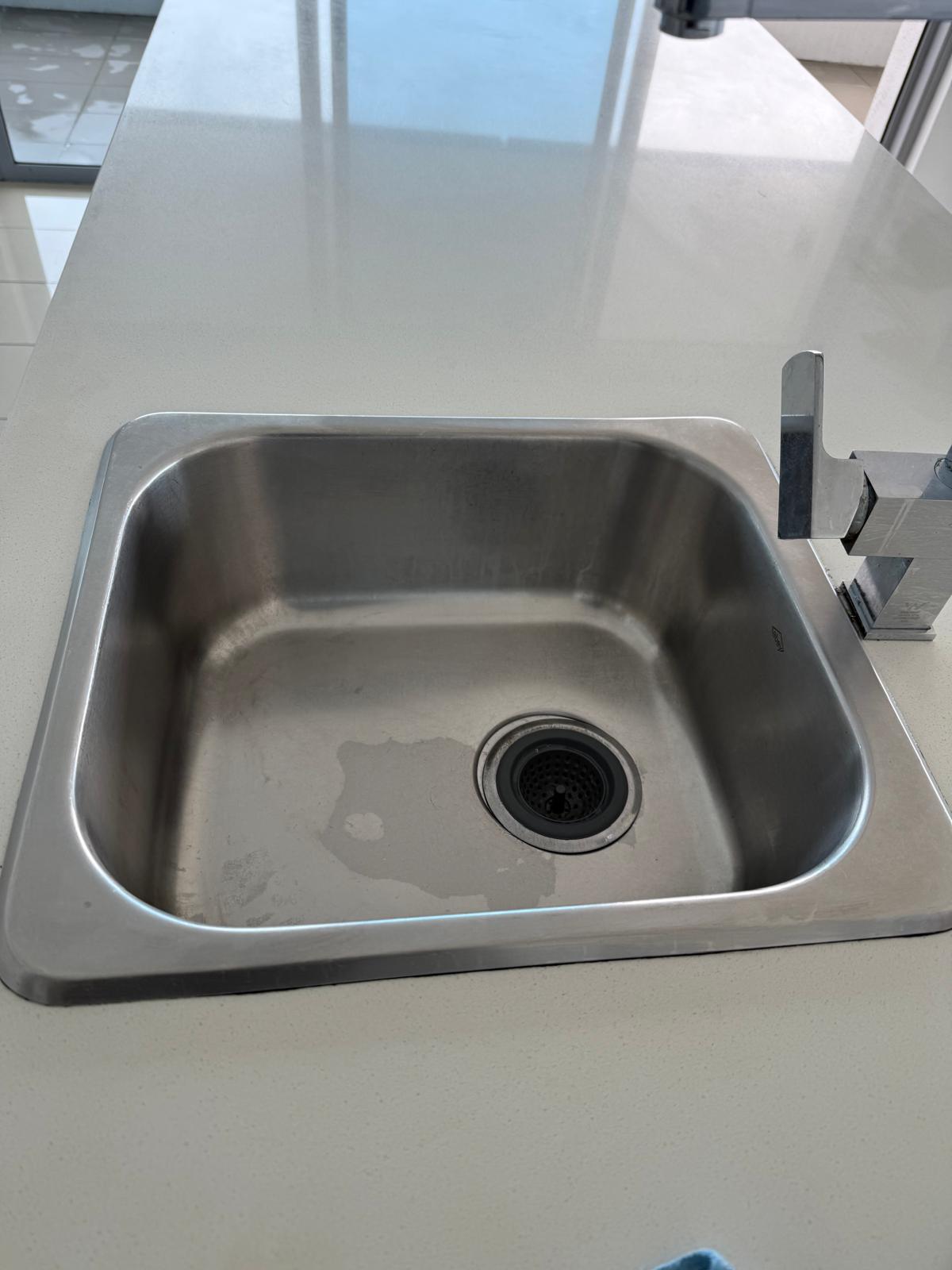
How to Shine a Stainless Steel Sink (Without Scratches)
Sinks handle heavier wear, so the method changes slightly.
1) Clean with dish soap + warm water
Remove food residue and daily grime first.
2) Use baking soda paste for stains
Sprinkle baking soda, add a small splash of water, and create a gentle paste.
-
Rub softly with a microfiber cloth or soft sponge
-
Follow the grain (you’ll see it in most sinks)
-
Rinse thoroughly
3) Finish with vinegar (optional)
If you have hard water, a quick vinegar wipe removes the haze.
4) Dry and buff
Drying prevents new spots from forming immediately.
Common Stainless Steel Mistakes (That Make It Worse)
Using abrasive pads
They leave fine scratches that hold grime and make the surface look permanently dull.
Spraying cleaner directly onto appliances
Cleaner can seep into edges, buttons, and seams. Spray onto the cloth instead.
Skipping the rinse
Soap residue can cause streaking. Always wipe again with clean water, then dry.
Polishing before cleaning
Oil polish on top of grease = smears that come back the next day.
How to Keep Stainless Steel Shiny Longer (Low Effort)
-
Wipe spills immediately (especially around taps and sink edges)
-
Dry after cleaning—this is the real “shine trick”
-
Use a microfiber cloth daily on fridge handles
-
Do a quick weekly vinegar wipe for water spots
-
Polish appliances lightly every 2–4 weeks (or when fingerprints become noticeable)
If you’re preparing for an inspection or move-out, stainless steel detailing can make kitchens look dramatically better. Consider bundling it with end of lease cleaning (internal link: /end-of-lease-cleaning).
When It’s Worth Calling Professionals
If you’ve got:
-
thick grease build-up on rangehoods
-
years of cloudy mineral deposits
-
stubborn staining around taps or sink edges
-
a full-house reset needed quickly
…it may be easier and more cost-effective to book a deep cleaning service (internal link: /deep-cleaning) or ongoing regular house cleaning (internal link: /regular-house-cleaning).
To organise a clean, head to get a quote (internal link: /contact).
Final Thoughts
Stainless steel shines when it’s cleaned in the right order: degrease → rinse → dry → de-spot → polish. Once you do it properly, maintenance becomes quick—usually just a fast wipe and dry.
For more practical guides, visit more cleaning tips (internal link: /blog).
